




From Gaming to AI: The Inside Story of Nvidia's Rise to Power


What if the secret to the future of artificial intelligence lay in the hands of a company originally known for enhancing video game graphics?
Nvidia, a once-niche player in the gaming industry, has evolved into one of the most influential tech giants in the world, commanding the forefront of AI, deep learning, and machine learning innovation.
From revolutionizing gaming with GPUs (graphics processing units) to pioneering AI chips that power self-driving cars, data centers, and cloud computing, Nvidia has become synonymous with cutting-edge technology.
But how did this transformation happen?
The Birth of Nvidia and the GPU Revolution
In 1993, Nvidia was founded by Jensen Huang, Chris Malachowsky, and Curtis Priem. The company’s vision was ambitious but specific: to accelerate computing by focusing on visual processing. This idea materialized in 1999 with the release of the GeForce 256, the world’s first GPU.
Unlike traditional CPUs (central processing units), GPUs were designed to handle complex calculations in parallel, making them ideal for rendering high-quality video game graphics. The GeForce line quickly became the gold standard for gaming enthusiasts, solidifying Nvidia’s position as a leader in the gaming technology space.
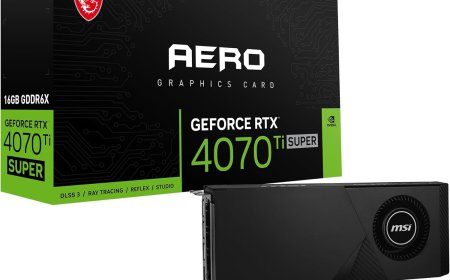
The gaming market was exploding in the late 1990s and early 2000s, and Nvidia capitalized on this wave with relentless innovation. The introduction of Nvidia RTX in 2018 further raised the bar, incorporating real-time ray tracing and AI-enhanced graphics for unparalleled realism in gaming.
But Nvidia’s GPUs were about to find a new purpose, one that would redefine their role in computing.
The Pivot to Artificial Intelligence
The turning point for Nvidia came in the mid-2000s with the rise of CUDA (Compute Unified Device Architecture). Launched in 2006, CUDA was a groundbreaking platform that allowed developers to use Nvidia’s GPUs for general-purpose computing tasks, not just graphics.
This innovation opened doors to new applications in high-performance computing (HPC), scientific research, and, most importantly, artificial intelligence. Researchers discovered that GPUs, with their parallel processing power, were uniquely suited for training complex AI and deep learning models.
By the 2010s, machine learning and deep learning were becoming critical technologies in industries ranging from healthcare to finance. Nvidia’s GPUs became the de facto standard for training AI models, such as neural networks used in image recognition, natural language processing, and predictive analytics.
AI Chips and Data Center Dominance
As the demand for AI grew, so did the need for specialized hardware. Nvidia seized the opportunity to develop AI chips tailored for this purpose. The introduction of the Tesla series of GPUs (later renamed the A100 and H100 for AI-focused applications) marked a major milestone.

These chips weren’t just faster but also they were transformative. They became the backbone of AI research and development, powering everything from recommendation algorithms on streaming platforms to autonomous driving systems.
Nvidia’s dominance in data centers became apparent as major companies like Google, Amazon, and Microsoft adopted its GPUs for their cloud computing services. Nvidia GPUs are now a critical component in some of the world’s most powerful supercomputers.
Leadership and Vision
Nvidia’s success isn’t just a story of technology; it’s also a story of leadership. Jensen Huang, the company’s co-founder and CEO, is widely regarded as one of the most visionary leaders in the tech industry.
Huang’s approach combines a deep understanding of technology with a long-term strategic vision. He saw the potential of GPUs beyond gaming long before others did, positioning Nvidia to capitalize on the AI revolution.
Huang’s hands-on leadership style and ability to communicate complex ideas have earned him widespread respect. His decision to invest heavily in R&D and focus on long-term goals rather than short-term profits was pivotal in Nvidia’s rise.
Beyond AI
While Nvidia’s dominance in AI is well-established, the company is also expanding into other cutting-edge markets:
Self-Driving Cars
Nvidia’s DRIVE platform leverages AI and GPUs to enable autonomous vehicles. By partnering with major automakers like Tesla, Mercedes-Benz, and Volvo, Nvidia is helping shape the future of transportation.
Cloud Computing
The rise of cloud computing has further boosted Nvidia’s influence. GPUs are critical for the massive data processing needs of cloud platforms, and Nvidia’s presence in this sector continues to grow.
High-Performance Computing (HPC)
From weather simulations to molecular research, HPC applications rely heavily on Nvidia’s GPUs. Their technology is now integral to solving some of the world’s most complex problems.
Competitive Advantage in the Semiconductor Industry
The semiconductor industry is fiercely competitive, but Nvidia has maintained its edge through innovation and adaptability. Unlike traditional chipmakers like Intel, Nvidia doesn’t manufacture its chips. Instead, it focuses on design and relies on partners like TSMC for production. This fabless model has allowed Nvidia to scale efficiently.
Nvidia’s ability to consistently deliver cutting-edge products has kept it ahead of rivals like AMD. Its software ecosystem, including CUDA, gives it a competitive advantage that extends beyond hardware.
Challenges and the Road Ahead
Despite its success, Nvidia faces challenges. The semiconductor industry is subject to supply chain disruptions, and geopolitical tensions could impact production. Additionally, competition in the AI hardware space is heating up, with companies like Google (TPUs) and Amazon (Inferentia) developing their own chips.
However, Nvidia’s commitment to innovation and its strong market position make it well-equipped to navigate these challenges. The company is also investing in new areas, such as quantum computing and edge AI, ensuring it remains at the forefront of technological advancement.
In conclusion, Nvidia’s journey from a gaming graphics specialist to an AI powerhouse is a testament to the power of vision, innovation, and strategic thinking. By recognizing the potential of its GPU technology beyond gaming, Nvidia has become a cornerstone of the AI revolution, driving advancements in fields as diverse as healthcare, transportation, and cloud computing.
Under the leadership of Jensen Huang, Nvidia has not only dominated the AI and semiconductor industries but has also shaped the future of technology. As the demand for AI continues to grow, Nvidia’s role as a leader in this space is all but assured.
So, whether you’re marveling at the hyper-realistic graphics of an Nvidia RTX-powered video game or witnessing the transformative impact of AI in industries around the world, one thing is clear: Nvidia isn’t just keeping up with technological change..
it’s defining it!
What are your thoughts on Nvidia’s incredible journey? Share your insights in the comments below and explore our other articles on AI, gaming, and technology for more fascinating stories about the innovators shaping our world!
FAQs
What is Nvidia best known for?
Nvidia is best known for its graphics processing units (GPUs), which revolutionized gaming by delivering high-quality visuals and performance. Over time, the company has expanded its expertise into artificial intelligence (AI), machine learning, data centers, and autonomous vehicles, becoming a leader in the tech industry.
How did Nvidia transition from gaming to AI?
Nvidia's transition began with the development of CUDA in 2006, a platform that allowed its GPUs to handle general-purpose computing tasks. Researchers soon discovered that GPUs were ideal for training AI models due to their parallel processing capabilities. This innovation laid the foundation for Nvidia's dominance in AI and deep learning.
What role does Nvidia play in AI and machine learning?
Nvidia provides the hardware and software needed to train and deploy AI and machine learning models. Its AI chips, such as the A100 and H100 GPUs, power data centers, self-driving cars, and cloud computing platforms. The company's GPUs are widely used in applications like natural language processing, image recognition, and predictive analytics.
Who is Jensen Huang, and how has he influenced Nvidia’s success?
Jensen Huang is Nvidia’s co-founder and CEO, known for his visionary leadership and focus on innovation. He identified the potential of GPUs beyond gaming early on and strategically positioned Nvidia as a leader in AI and high-performance computing. His commitment to R&D and long-term goals has been instrumental in the company’s growth.
What challenges does Nvidia face in the future?
Nvidia faces challenges such as supply chain disruptions in the semiconductor industry, increasing competition from companies like Google and Amazon, and geopolitical risks. However, its strong market position, innovative products, and investments in emerging technologies like quantum computing and edge AI help it remain a dominant force.
What's Your Reaction?
 Like
0
Like
0
 Dislike
0
Dislike
0
 Love
0
Love
0
 Funny
0
Funny
0
 Angry
0
Angry
0
 Sad
0
Sad
0
 Wow
0
Wow
0